Innovation doesn’t follow a single path. It shows up in shipping containers reimagined as critical food infrastructure, in daily habits that strengthen athletes’ mental edge, in safer chemistry reshaping industrial processes, and in diagnostics that aim to catch cancer earlier, when it matters most. These four companies share a focus on practical progress, translating real-world challenges into scalable solutions. Some are rooted in rural Kansas. Others are advancing breakthroughs from the lab. All are moving ideas forward with intention, backed by the validation and momentum of ACCEL-KS.
This is the first in a series of features showcasing the companies awarded ACCEL-KS funding through KU Innovation Park. Each company answered the same three questions, and you can read about each venture below.
620 Fab Co. | Pittsburg, Crawford County
About 620 Fab Co.
620 Fab Co. is developing modular, portable cold storage units designed to expand access to fresh food in rural communities. Built from repurposed shipping containers, these units offer a lower-cost, flexible alternative to traditional walk-in coolers, which are often outdated or prohibitively expensive to replace. The company’s work is rooted in firsthand experience supporting hydroponic farm deployments across Kansas, where gaps in food distribution infrastructure became clear. Through ACCEL-KS, 620 Fab Co. is engaging directly with communities, retailers, and food distribution partners to validate demand and refine cost models for scalable production. The goal is practical and immediate: make reliable cold storage more accessible without requiring permanent construction or major capital investment. In doing so, the company is addressing a critical but often overlooked barrier to food access in rural Kansas.
What problem are you solving and why does it matter now?
Through our work building hydroponic farms for Community Green Farms, we became aware of the challenges many Kansans face when it comes to accessing fresh, nutritious food. While Kansas is often considered the breadbasket of the nation, many communities, especially in rural areas, have limited access to healthy produce. Family-owned grocery stores are struggling to stay open due to rising costs, including aging cold storage units, some more than 50 years old. At the same time, rural counties experience higher poverty rates, and in some areas, a significant portion of residents live below the federal poverty level. Food pantries are also often understaffed and undersized. Reliable cold storage is essential to preserving perishable food, yet many communities lack the resources to maintain or replace this infrastructure.
What are you building or validating through ACCEL-KS?
Our goal is to provide an affordable cold storage solution. Today, much of the existing cold storage infrastructure is more than 25 years old, and replacing it with new walk-in coolers can cost up to $300 per square foot. Space constraints within existing buildings also present challenges. Our approach uses repurposed shipping containers that can be placed adjacent to existing facilities, reducing both cost and footprint. We believe these units can be built for roughly one-third the cost of traditional systems. Through ACCEL-KS, we are working to validate demand by engaging with communities, retailers, and nonprofit food distribution centers, while also consulting technical experts to refine our cost-to-build and deployment model.
What excites you the most about taking this next step with your company?
620 Fabrication’s mission is to create affordable, innovative solutions for communities and consumers in need. We have experience transforming shipping containers into hydroponic farms, tiny homes, retail pop-ups, construction offices, laundry and restroom facilities, and self-storage units. This next step allows us to apply that expertise to cold storage, addressing a critical infrastructure need. Being able to assess market demand and access technical support through ACCEL-KS will help us expand our capabilities and scale this solution across Kansas and beyond.
Myndset | Lawrence, Douglas County
About Myndset
Myndset is a digital platform delivering structured mental performance training for athletes in a format designed to fit real team environments. While physical training is deeply integrated into sports programs, mental training often remains inconsistent, limited by staff capacity or generic, one-size-fits-all content. Myndset addresses this gap with short, daily exercises that build mental skills through repetition, much like physical conditioning. Through ACCEL-KS, the company is conducting formal validation to measure how its platform impacts athlete performance and engagement. This includes developing evidence-based materials that athletic departments can use to assess outcomes and inform adoption. The goal is to move beyond anecdotal value and establish a measurable, scalable approach to mental training. As demands on athletes continue to increase, tools like Myndset aim to make mental performance support more accessible, consistent, and effective.
What problem are you solving and why does it matter now?
Athletes operate in high-pressure environments, but mental performance support does not scale effectively. Most programs rely on limited staff capacity or generic content that does not drive meaningful behavior change. Myndset delivers short, daily mental training exercises that fit into real team schedules. As the intensity and mental demands of sports continue to increase, programs need scalable tools to support athletes before challenges impact development or performance.
What are you building or validating through ACCEL-KS?
We are conducting a product validation and performance measurement study to understand how Myndset drives outcomes for athletes. The goal is to produce stakeholder-ready evidence, including an Evidence Brief and supporting materials that clearly show what changed, for whom, and how results connect to consistent usage.
This work provides athletic departments and future partners with confidence that Myndset is not only engaging but delivering measurable impact.
What excites you the most about taking this next step with your company?
This is the stage where Myndset moves from “people like it” to “we can prove it works.” Building a credible evidence foundation is key to earning trust from athletic departments and accelerating adoption.
Partnering with KU also creates a long-term validation opportunity that can support multi-site studies, deeper outcome tracking, and a strong position in digital mental performance training.
Sulverra | Lawrence, Douglas County
About Sulverra
Sulverra is developing a new class of superacid catalysts designed to replace hazardous mineral acids used in large-scale industrial processes. Industries such as refining and detergent manufacturing continue to rely on substances like hydrofluoric and sulfuric acids, which pose significant safety, corrosion, and emissions risks. Sulverra’s approach aims to deliver the same chemical performance with a safer, more efficient alternative. Through ACCEL-KS, the company is advancing from lab-scale results to pilot-scale validation, generating data to demonstrate real-world performance. This includes benchmarking catalyst effectiveness, documenting safety improvements, and preparing for additional funding opportunities. The work supports a broader shift toward safer and more sustainable industrial chemistry. In doing so, Sulverra is addressing a long-standing challenge with practical, scalable innovation.
What problem are you solving and why does it matter now?
The refinery alkylation and detergent industries still rely on harsh mineral acids such as hydrofluoric and sulfuric acid, which present significant safety, corrosion, and emissions challenges. There is a clear need for alternative catalysts that can deliver the same chemistry with improved safety and efficiency. Sulverra is developing a new class of superacid catalysts to meet that need.
What are you building or validating through ACCEL-KS?
With ACCEL-KS support, we are further developing, testing, and scaling our superacid catalysts. This includes generating performance data, benchmarking against existing solutions, documenting safety improvements, and preparing materials for future SBIR proposals.
What excites you the most about taking this next step with your company?
We are excited to move from lab-scale results to pilot-scale validation. The goal is to deploy improved catalysts in industrial settings where they can make operations safer, cleaner, and more efficient.
Vytas Bio | Lawrence, Douglas County
About Vytas Bio
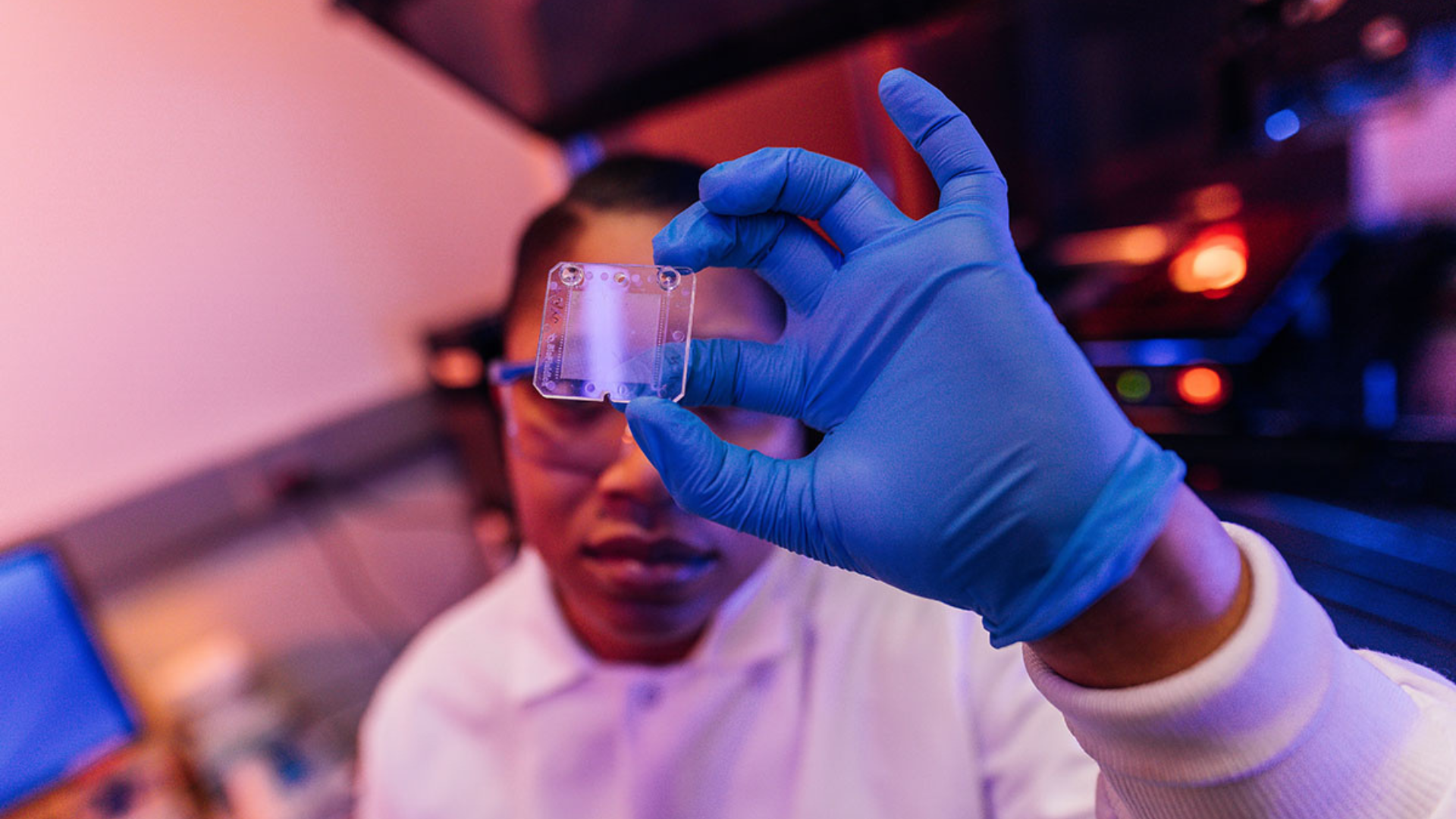
Vytas Bio is developing non-invasive diagnostic tools designed to detect cancer earlier using urine-based liquid biopsies. Many cancers are still diagnosed at later stages, when treatment options are more limited, more invasive, and more costly. By focusing on painless, easily collected samples, the company aims to make early detection more accessible and scalable. Its initial focus is ovarian cancer, where earlier diagnosis can significantly improve outcomes. Through ACCEL-KS, Vytas Bio is advancing the development of a laboratory-developed test (LDT) to establish proof of concept. This work lays the foundation for a broader pipeline of diagnostic tools targeting additional cancers and diseases. The long-term goal is to shift detection earlier, improving both patient outcomes and overall healthcare efficiency.
What problem are you solving and why does it matter now?
Many types of cancer are detected only at later stages, when treatment is more difficult and outcomes are less favorable. Painless, urine-based liquid biopsies offer the potential for earlier diagnosis, which can improve treatment effectiveness, reduce patient burden, and lower overall healthcare costs.
What are you building or validating through ACCEL-KS?
Through ACCEL-KS, we are developing a urine-based liquid biopsy as a laboratory-developed test (LDT) for ovarian cancer.
What excites you the most about taking this next step with your company?
Building the first ovarian cancer LDT serves as a foundational proof-of-concept. It creates a pathway for developing a broader suite of diagnostic tests for other cancers and diseases.