
#

Back to Blog

Research could lead to cheaper, better testing for ‘forever chemicals’ in US drinking water

Jun 4, 2026

This story is from KU News Services and was originally published here.

By Brenden Lynch, KU News Service

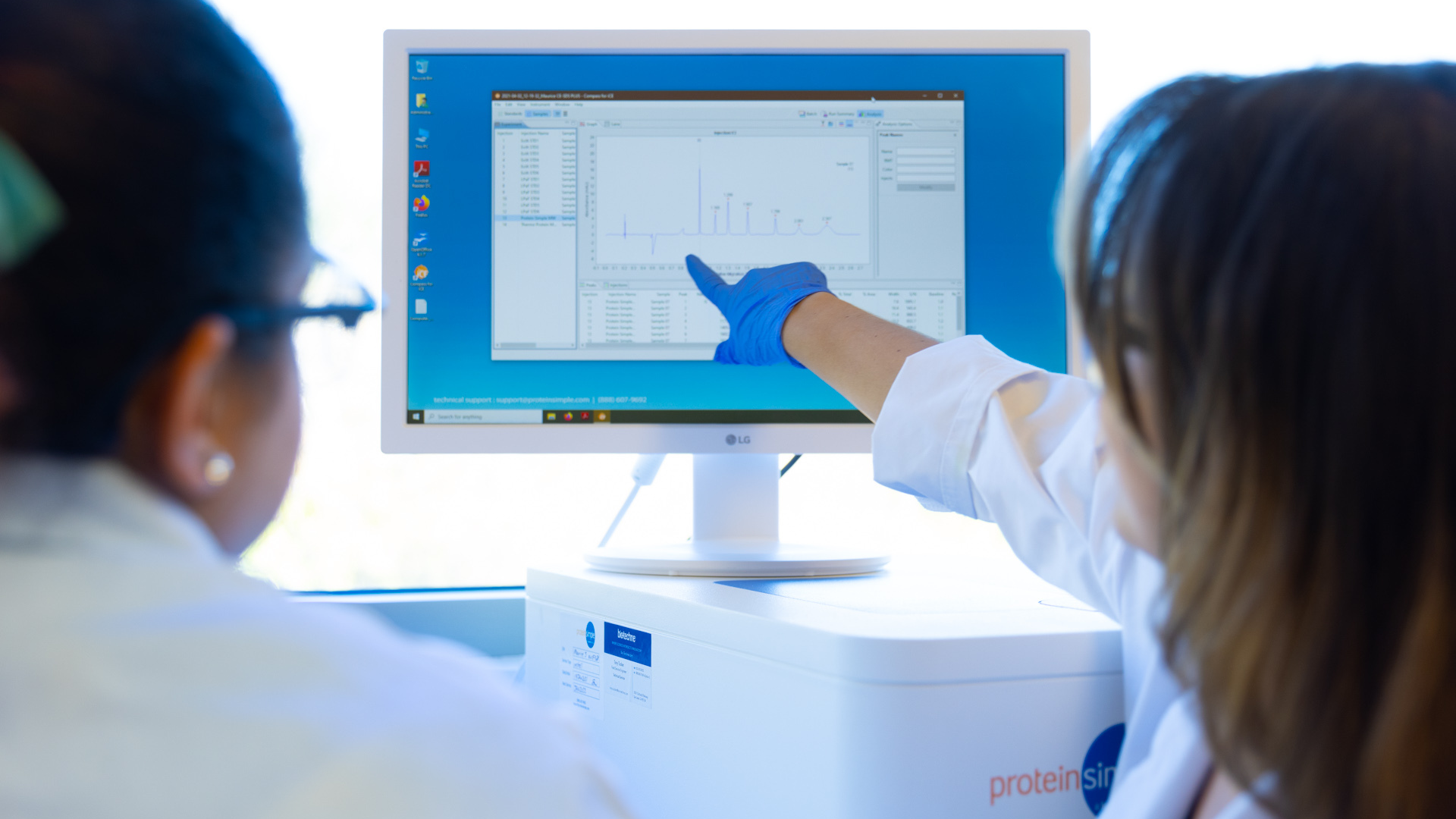
A new investigation from the University of Kansas improves detection of PFAS, a family of so-called “forever chemicals” in drinking water supplies. The method, which can measure trace pollution levels of PFAS in water more quickly and inexpensively than current techniques, recently was detailed in the open-source journal PLOS Water.

PFAS chemicals, marketed for decades in products like nonstick cookware and fire- and stain-resistant fabrics, linger in the environment and the human body, and they can cause cancers, immune system problems and developmental issues.

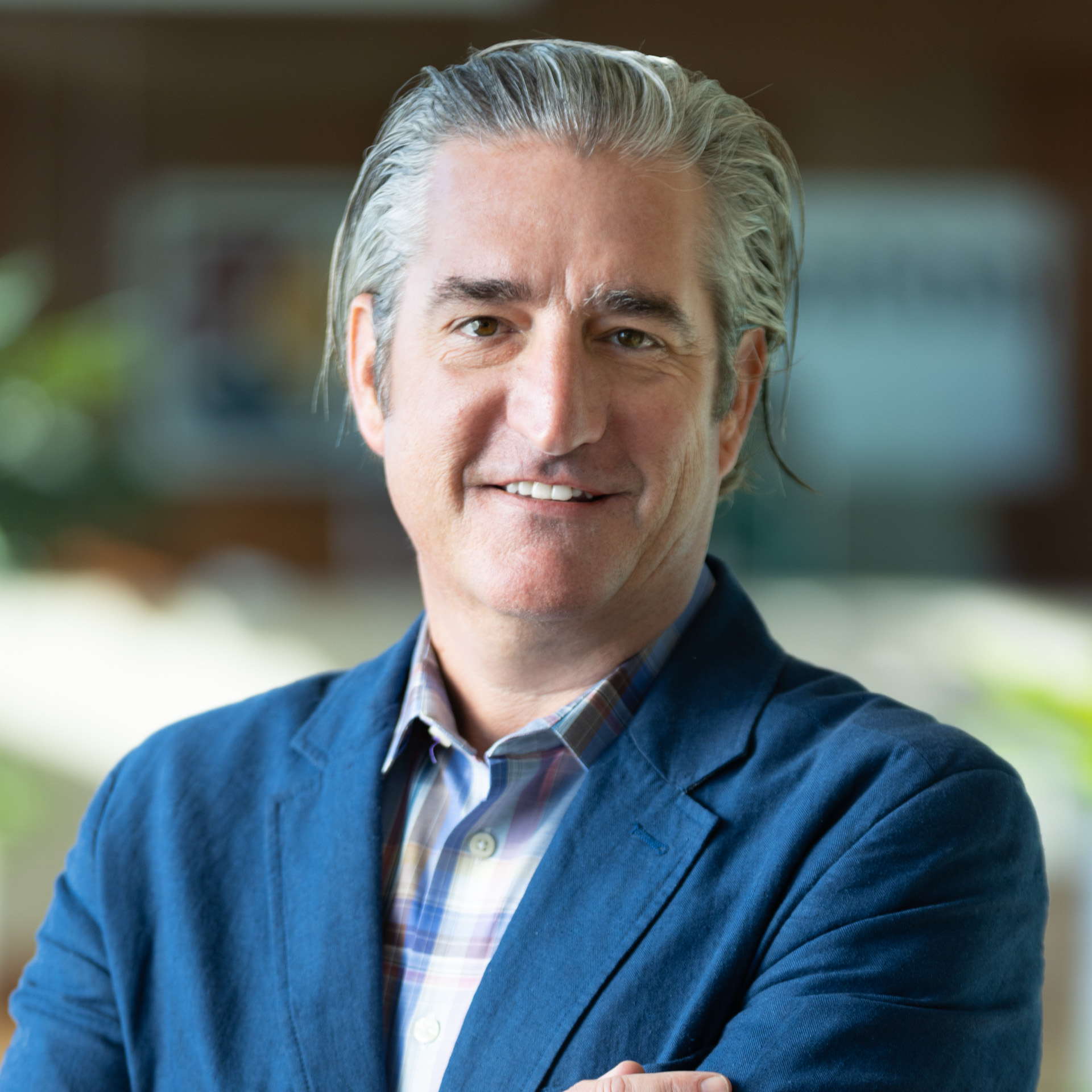
“These are man-made synthetic chemicals that contain poly- or perfluorinated carbons,” said study co-author Michael Zhuo Wang, professor of pharmaceutical chemistry at the University of Kansas. “They’re used in industry to make products like Teflon, anti-water coatings and firefighting foams. They have wide industrial applications. The problem is they don’t break down very easily in the environment.”

Wang said these chemicals stay in the environment, move around in soil and water, and eventually end up in drinking water.

“Our body can absorb these compounds into the blood and tissues, and we don’t have the capacity to break them down either,” he said. “So, they accumulate in the body. Some studies show half-lives in the range of five to eight years in blood. More and more epidemiological studies suggest they may be associated with health issues, including developmental issues and certain cancers. Kidney cancer and testicular cancer in men are two that have been mentioned in recent studies.”

Because of these serious health concerns, there’s a move among U.S. lawmakers to tighten regulations of PFAS in drinking water. However, to comply, private and municipal labs will need to be able to economically and effectively detect PFAS compounds in ultra-trace amounts.

“The current EPA regulation limits some PFAS in drinking water to about 4 parts per trillion. Depending on the compound, regulated levels range roughly from 4 to 10 parts per trillion,” Wang said. “They also have maximum contaminant level goals, which suggest ideally there should be zero. So, the target is essentially no detectable PFAS.”

Yet to determine whether PFAS are below the 4 parts-per-trillion level, labs need extremely sensitive tests beyond what’s capable at typical labs that analyze municipal drinking water.

“The biggest challenge is sensitivity — how to go down to sub-part-per-trillion levels. Detecting PFAS at this low level is like finding a few grains of sand in an Olympic-size swimming pool,” Wang said. “The most sensitive instrument is LC-MS (liquid chromatography-mass spectrometry). But without sample pre-concentration, it only reaches parts per billion, which is about a thousand times higher than the parts-per-trillion level.”

The KU researcher said current EPA methods require concentrating the water sample first, a time-consuming process.

“Typically, you start with 500 milliliters of water and use solid phase extraction to concentrate it before analysis,” Wang said. “That concentration step is what drives time and cost. It requires large sample volumes, and the process is slow.”

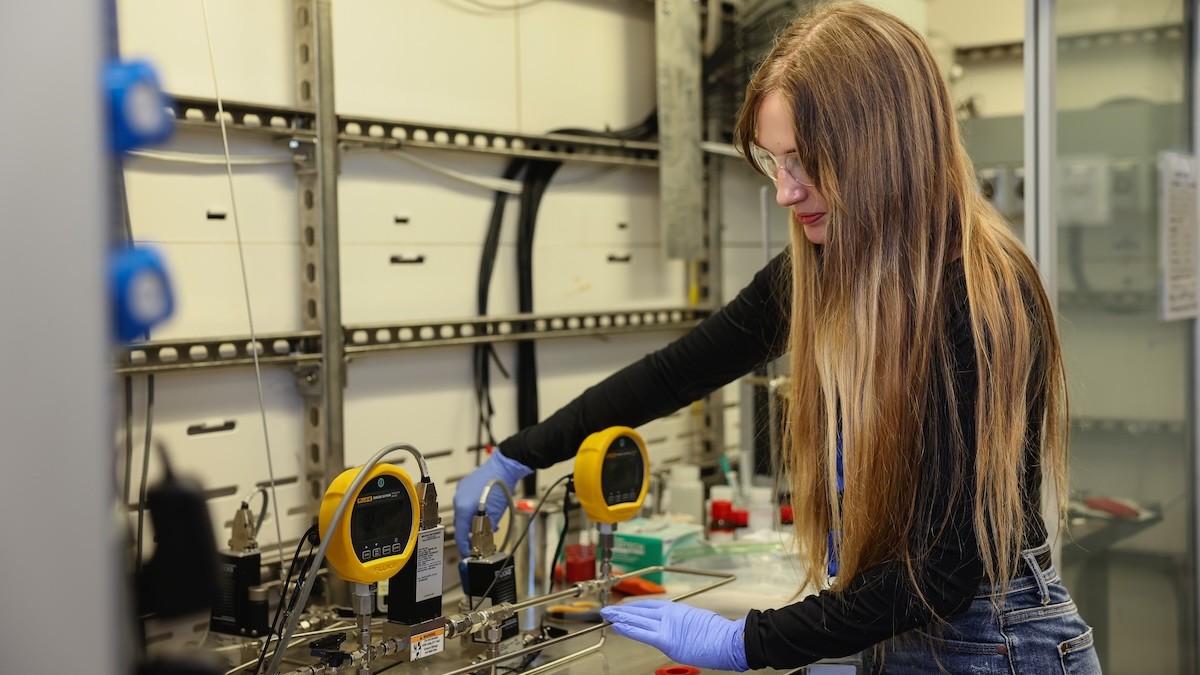
The KU researcher and his lab members, doctoral student Deepak Timalsina, who served as lead author of the study, and co-author Bhargavi Srija Ramisetty, a recent doctoral student, sought to develop more practical, economic and time-saving approaches to detecting PFAS that are accurate and scalable.

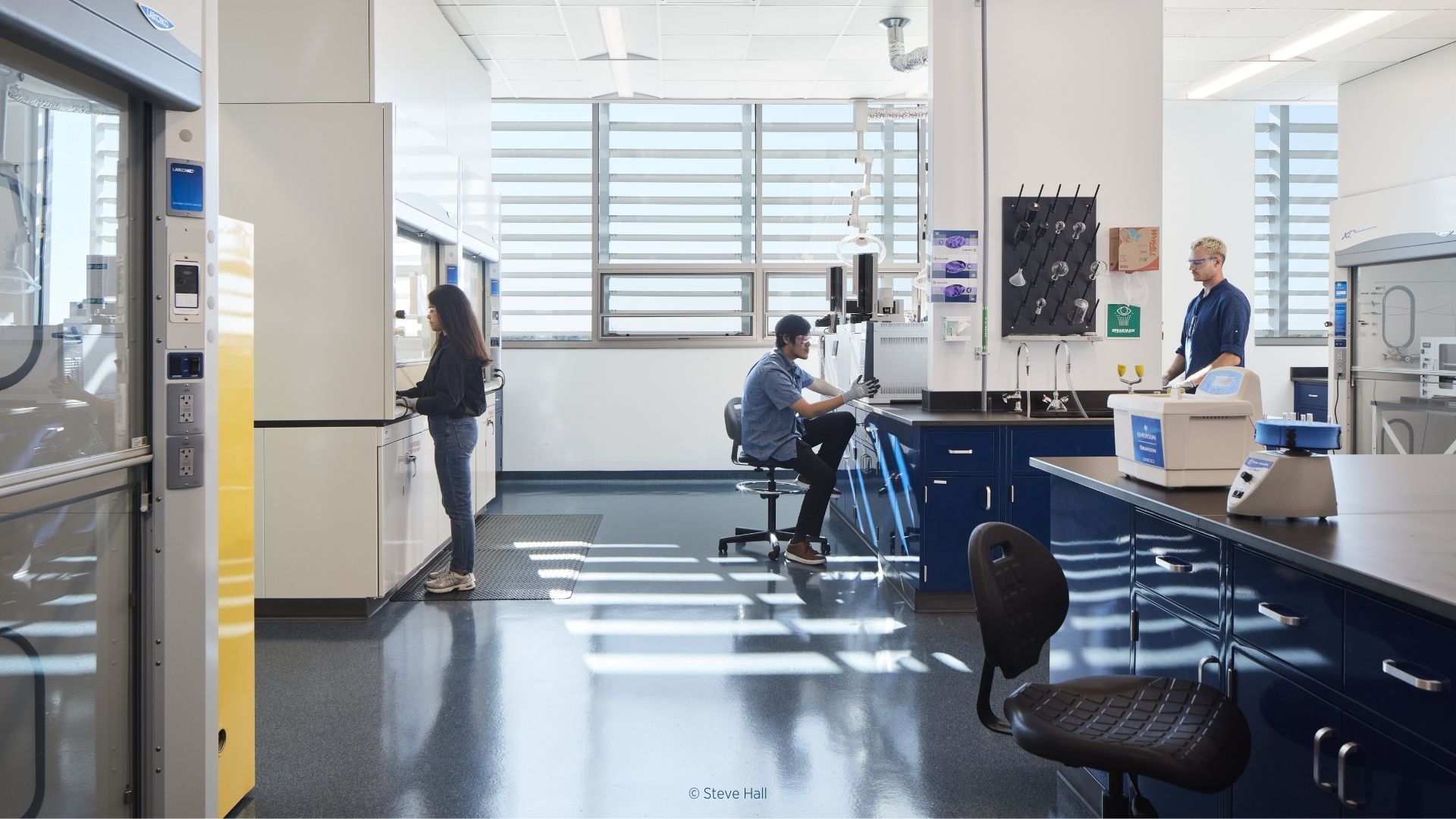
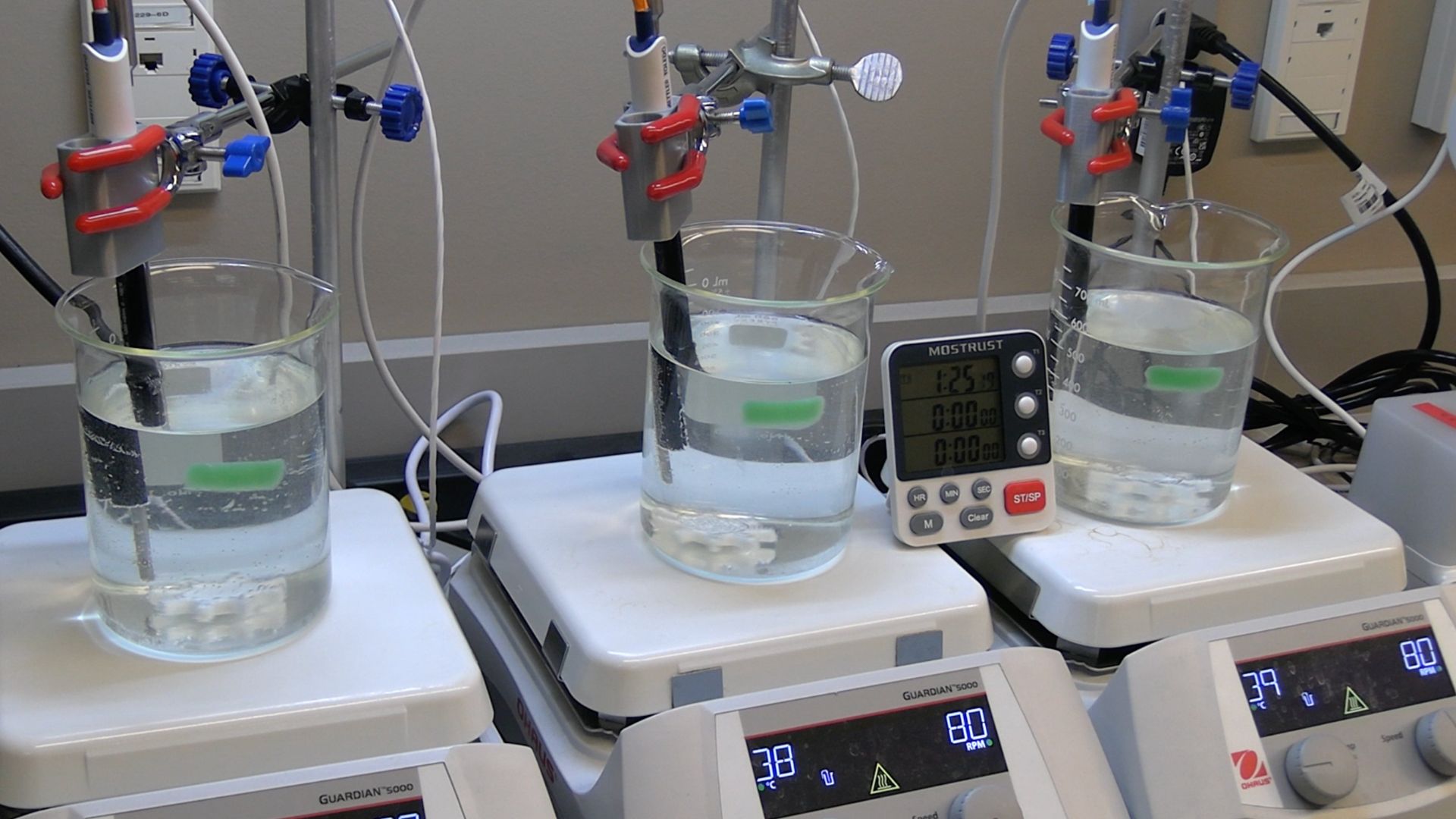
To do so, they combined fast-flow solid-phase extraction (SPE) for concentrating PFAS from water samples with UPLC-MS/MS (Ultra Performance Liquid Chromatography–Tandem Mass Spectrometry) for very sensitive chemical analysis.

“The biggest improvement in our method is time reduction in sample concentration,” he said. “We reduced the time from hours to minutes. For a 500 milliliter sample, it used to take about 100 minutes to load. Now it takes about 6 to 8 minutes, about a 20-fold reduction. To push detection even lower, you need larger volumes — up to 4 liters instead of 500 milliliters. That’s an eightfold increase in volume.”

With the original method, the same process would take about eight times longer, more than a half-day just for loading sample onto SPE cartridge.

“With the fast-flow approach, we can do that in about 60 minutes,” Wang said.

In addition to cutting the time involved in preparing samples, the KU process for fast-flow solid-phase extraction slashes the price of PFAS analysis.

“What worried me most is the cost of current methods,” Wang said. “Today, each sample can cost at least $400 to $500 for analysis in the marketplace. That’s too expensive to fully implement EPA regulations across all water treatment plants. The goal is to reduce that cost so water bills don’t increase significantly due to monitoring requirements.”

One impediment to broader, more rigorous PFAS sampling is the complexity and expense of sending heavy volumes of water from drinking-water processing plants to testing labs.

“One challenge is logistics, shipping large water samples from the field to labs,” Wang said. “Samples can be 500 milliliters or even 4 liters. That’s heavy and inconvenient to transport.”

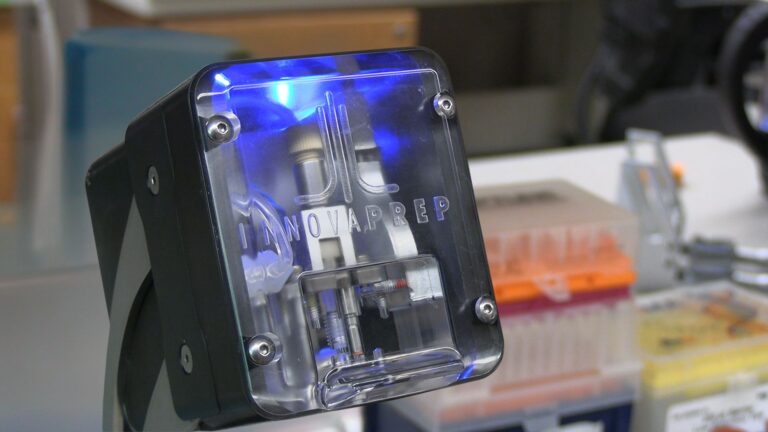
To address the problem, today Wang’s team is collaborating with InnovaPrep, a company based at KU Innovation Park with funding from an NIH Small Business Technology Transfer grant.

“The idea is to develop a concentrating device, like a pipette-based system, that absorbs PFAS from water,” Wang said. “Instead of shipping large water volumes, you would ship a small, pencil-sized device to the lab. That would greatly reduce shipping cost and complexity.”

Wang said currently it’s too expensive to fully implement EPA regulations across all water treatment plants. He believes the expense of shipping and testing will continue to be a chief hurdle to detecting PFAS compounds.

“Our goal is to reduce that cost so water bills don’t increase significantly due to monitoring requirements,” he said.

 

Related News

A portrait of Kerri Johnson smiling

Aidan Dove

Business Analyst

Aidan Dove is a current Master’s degree student pursuing both a Master’s in Business Administration and a Master of Science in Business Analytics at the University of Kansas. Before attending KU, Aidan earned his Bachelor’s degree from Creighton University, double-majoring in Marketing and Business Intelligence & Analytics. Outside of crunching numbers, Aidan loves listening to records, building Legos, and spending time with his two cats, Winnie and Ruby.

A portrait of Kerri Johnson smiling

Sarah Plinsky

Administrator, Douglas County

Sarah Plinsky was hired as the County Administrator in September 2019 after serving in the interim position for nine months. She is currently a member of the board for KU Innovation Park. Before becoming the administrator, she had served as the Assistant County Administrator since December 2010. Previously, Sarah was the Assistant to the County Manager in Johnson County, Kansas. In Johnson County, she also served as the Interim Assistant County Manager for the Community Services Team and Interim Director of Public Health. Sarah is a graduate of Leadership ICMA (International City and County Management Association) and the Senior Executive Institute at the University of Virginia. She holds a B.A. in political science and a Master’s in public administration from the University of Kansas.

A portrait of Kerri Johnson smiling

Bonnie Lowe

President & CEO, The Chamber, Lawrence

Bonnie Lowe has been the president and chief executive officer of The Chamber of Lawrence since January 2019. In that role, she is responsible for leadership, strategic planning, and management functions. She had earned her Bachelor of Science in Finance from Fort Hays State University. Before her current position, Bonnie was the chief operations officer for the Chamber. For four years before working with the Chamber, Bonnie was a senior civil investigator for the US Attorney’s Office. In Lawrence, from 1998 to 2008, Bonnie worked as the Community Bank President. She also served on the Lawrence City Commission.

A portrait of Kerri Johnson smiling

Steven W. Stites, M.D., F.A.C.P., F.A.C.C.P

Executive Vice President, Clinical Affairs & Chief Medical Officer, KU Medical Center

Dr. Steve Stites joined the hospital’s leadership team as senior vice president of clinical affairs in February 2012 and became executive vice president and chief medical officer for the health system in July 2018. He serves a dual role as vice chancellor for clinical affairs at the University of Kansas Medical Center. Dr. Stites received his medical degree from the University of Missouri-Columbia. He completed his residency and chief residency in internal medicine at the University of Rochester and a fellowship at the University of Kansas Medical Center.

A portrait of Kerri Johnson smiling

Mark Shiflett, Ph.D., P.E.

Co-Founder & CSO of Icorium, Distinguished Foundation Professor

Dr. Mark Shiflett is a Distinguished Foundation Professor in the School of Engineering at the University of Kansas (KU), where his research focuses on developing environmentally friendly, energy-efficient processes and products for the chemical industry. He retired from the DuPont Company after 28 years in 2016 as a Technical Fellow in the Central Research and Development Organization at DuPont’s Experimental Station in Wilmington, Delaware. Mark is an inventor on 46 U.S. patents and has published over 130 articles on his research at DuPont. He is also the co-founder and chief science officer of Icorium Engineering Company, a KU spin-out company revolutionizing refrigerant reclamation with efficient, complete separation of even the most complex mixes.

A portrait of Kerri Johnson smiling

Derek Kwan

Board Secretary – Executive Director, Lied Center of Kansas

Derek Kwan serves as the Lawrence Chamber Board Chair and secretary of KU Innovation Park’s Board of Directors. He has served as the Executive Director of the Lied Center of Kansas since January 2014. Derek previously worked for Interlochen Center for the Arts as the Executive Director of Interlochen Presents. At the Lincoln Center in New York City, Derek served as the Vice President of Concerts and Touring for Jazz and the Associate Director of Programming & Concert Operations for Jazz. A voting member of the Recording Academy, he has production credits on over 60 albums. Derek also serves as a board member for the LMH Health Foundation.

A portrait of Kerri Johnson smiling

Michele Hammann, CPA/PFS, CVA

Treasurer - Chief Strategy Officer, SSC CPAs + Advisors

Michele received her Master of Accounting and Information Systems from the University of Kansas in 2001. She is a member of the American Institute of CPAs, the Kansas Society of CPAs and the National Association of Certified Valuation Analysts. She is the past Chair of the Board of the Lawrence Chamber of Commerce and A past President of Junior Achievement of Douglas County. In 2019, Michele received the KSCPA/AICPA ‘Women to Watch’ Experienced Leader Award.
A portrait of Kerri Johnson smiling

Karen Willey, Ph.D.
Commissioner, Douglas County

Karen Willey earned her Ph.D. in Geography from KU before starting and operating several successful businesses in Douglas County. Her latest company, FarmTender, LLC, is producing an online application geared toward expanding regenerative farming practices in Kansas. Currently, Dr. Willey leverages her 25 years of nonprofit board experience through her work as a professional consultant and grant writer with Futureful, a local consulting group serving health, housing, and human services nonprofits, mainly in urban Kansas City. In 2022, she was appointed to fulfill an unexpired term on the Douglas County Commission. Additionally, Dr. Willey serves as the President of BRAC, a local housing nonprofit, as a volunteer firefighter with Willow Springs Fire District, as a member of the NAACP Legal Redress Committee, and in many other community roles.

A portrait of Kerri Johnson smiling

Douglas Girod, M.D.

Board Chair - Chancellor, University of Kansas

Douglas Girod, M.D., has been the Chancellor of KU since 2017, where he established a bold vision for the University of Kansas to be a destination for top scholars from across the world, an engine of economic growth for Kansas, and one of the nation’s leading research universities. Chancellor Girod received his bachelor’s degree in chemistry at the University of California at Davis and his M.D. from the University of California at San Francisco. He is involved with several other organizations, including as a board member of the AAU, Civic Council of Kansas City, chambers of commerce in Lawrence and Greater Kansas City, and MRI Global. Chancellor Girod was recognized with a Regional Leadership Award from the Mid-America Regional Council in 2016 for his work with KC Rising.

A portrait of Kerri Johnson smiling

Mike Dever

Vice Mayor, City of Lawrence

Mike Dever was elected to the Lawrence City Commission in 2023 and serves as Vice Mayor. Mike is the president and CEO of GuideWire Consulting, LLC. He supervises the entire staff and all departmental services and oversees a wide variety of environmental and property assessment services.

A portrait of Kerri Johnson smiling

Kate Chinn

Incoming Chair, The Chamber of Lawrence

Kate Chinn is the chair-elect for The Chamber’s Board of Directors. Kate owns Express Employment Professionals in Lawrence, a leading staffing provider helping job seekers find work with a wide variety of local businesses.

A portrait of Kerri Johnson smiling

Kerri Johnson

Internal Operations Manager

Kerri Johnson manages the Park’s day-to-day operations, including all administrative and front office matters, managing activities, handling scheduling, and working with service providers to maintain and improve building efficiency and Park staff productivity.

A portrait of Mike Smithyman smiling

Michael Smithyman

Director of Operations

Mike Smithyman manages plant operations and construction, handles leasing and related client interfaces, and works with tenants and prospective tenants to meet various business growth, management, and operational needs. He brings years of experience in the commercial real estate industry to the Park. Additionally, Mike tracks and manages the Park’s economic metrics.

A portrait of Adam Courtney smiling

Chris Rehkamp

Vice President of Business Services

Chris Rehkamp is an experienced entrepreneurial ecosystem builder and has supported the launch and growth of new businesses for nearly a decade. An entrepreneur himself, Rehkamp most recently served as associate director of the Technology Venture Studio at the University of Missouri-Kansas City Innovation Center. Chris has a Master of Professional Studies in Technology Entrepreneurship from the University of Maryland. Startland News named him a Community Builder to Watch in 2022.

A portrait of Adam Courtney smiling

Lindsey Slater

Vice President of Strategic Communications

Lindsey Slater oversees strategic communications for the Park, raising brand awareness to drive business development and expansion while providing support to resident companies. An experienced communications professional with a knack for storytelling, Lindsey highlights the strengths of the Park and its companies through the written word, video and beyond. She most recently was the director of communications and storytelling for the Association of Chamber of Commerce Professionals. She has a journalism degree from Northwestern University's Medill School.

A portrait of Adam Courtney smiling

Adam Courtney

Chief Executive Officer & Board President

As CEO, Adam Courtney provides strategic and operational leadership of the Park, including overseeing business operations, strategic initiatives and resource management, and fostering the Park’s culture, mission and vision. Adam previously worked for the Federal Housing Finance Agency. He served as the Park’s chief financial officer for ten years before being named CEO and president of the Board in March 2024.