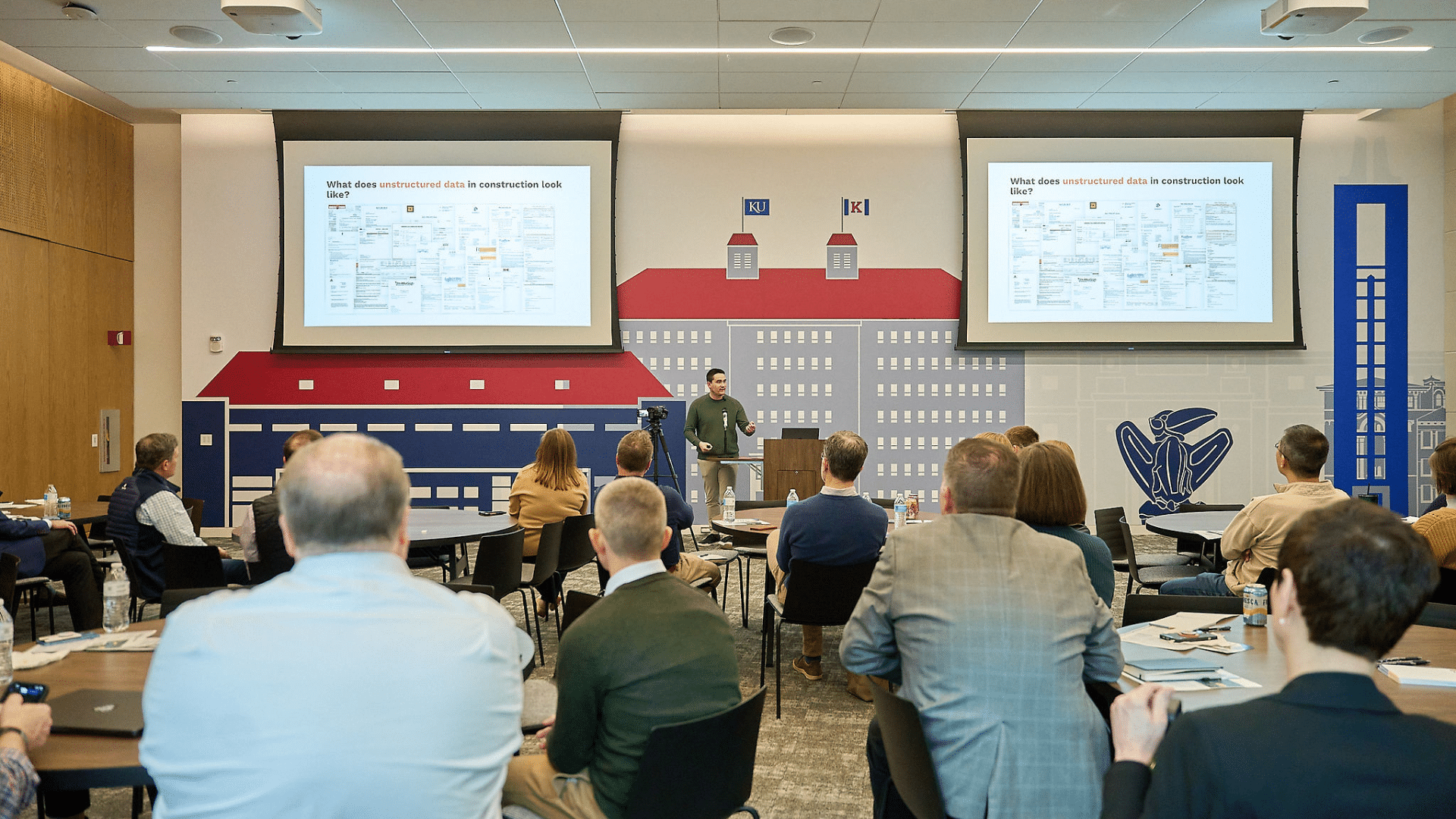

Entrepreneurship rarely follows a straight line. Building a business requires persistence, curiosity and the ability to find the right support at the right time. At a recent lunch and learn at KU Innovation Park, expert panelists shared candid insights about misconceptions, best practices and opportunities to strengthen the system for founders.
No invitation needed
One misconception is that entrepreneurs will be formally invited into the ecosystem. But in reality, the panelists agree that taking initiative is really the key to unlocking that door. “You really have to take the initiative,” said Will Katz, a lecturer for the MBA program at the KU School of Business and formerly the long-time director of the KU Small Business Development Center. “Once you join, it becomes a virtuous, self-reinforcing circle. You meet people and they lead you to other things, and they introduce you to other people who lead you to even cooler things.”
Find your entry point
The entrepreneurial support system in any community can include a range of players, like small business development centers, accelerators, incubators, funding agencies, and more. Where to begin depends on the founder’s needs and stages of growth.
- Start somewhere. SBDCs often serve as effective navigators and an easy starting point, no matter where you live (there are 1,100 across the U.S.).
- Go customer-centric. “The single best set of conversations you can have is with potential customers,” said Brian Anderson, the executive director of entrepreneurship initiatives and the Frank T. Stockton Professor at the KU School of Business.
- Find peers. Other founders, especially those facing similar challenges, often provide the most actionable advice.
Trust fuels connections
Expertise is important, but trust is what strengthens ecosystems. Founders should seek our partners, mentors or connectors who genuinely care about their success. Strong relationships create credibility and momentum, opening doors to meaningful opportunities. “My mission is to help you be more successful,” said Chris Rehkamp, director of business services at KU Innovation Park. “I might not have the tool or the connection for you right now, but if we build trust and rapport, I’m going to hold on to that.”
Strengthening support
No ecosystem is perfect, but panelists shared their vision for ways to improve.
- Experienced founders remain engaged in the ecosystem as mentors and investors.
- Spaces are created that build courage and confidence in aspiring entrepreneurs.
- The gap between research and application would be narrowed by moving innovations to end users faster.
The most effective ecosystems provide broad support while cultivating depth in sectors where the community has natural strengths, like bioscience and technology.
Key takeaways
- Entrepreneurs must take initiative to access resources and connections.
- Customer conversations should influence early decisions.
- Peer founders can be powerful guides.
- Trust can be as valuable as expertise in building relationships.
- Ecosystems thrive when successful founders reinvest in the next generation.